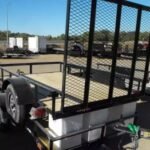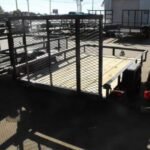
Looking for dependable Flatbed Trailers for equipment, machinery, construction materials, landscaping equipment, agricultural applications, or general hauling? USA Trailer Depot offers flatbed trailer solutions designed for a wide range of personal, commercial, construction, agricultural, and equipment-transportation needs.
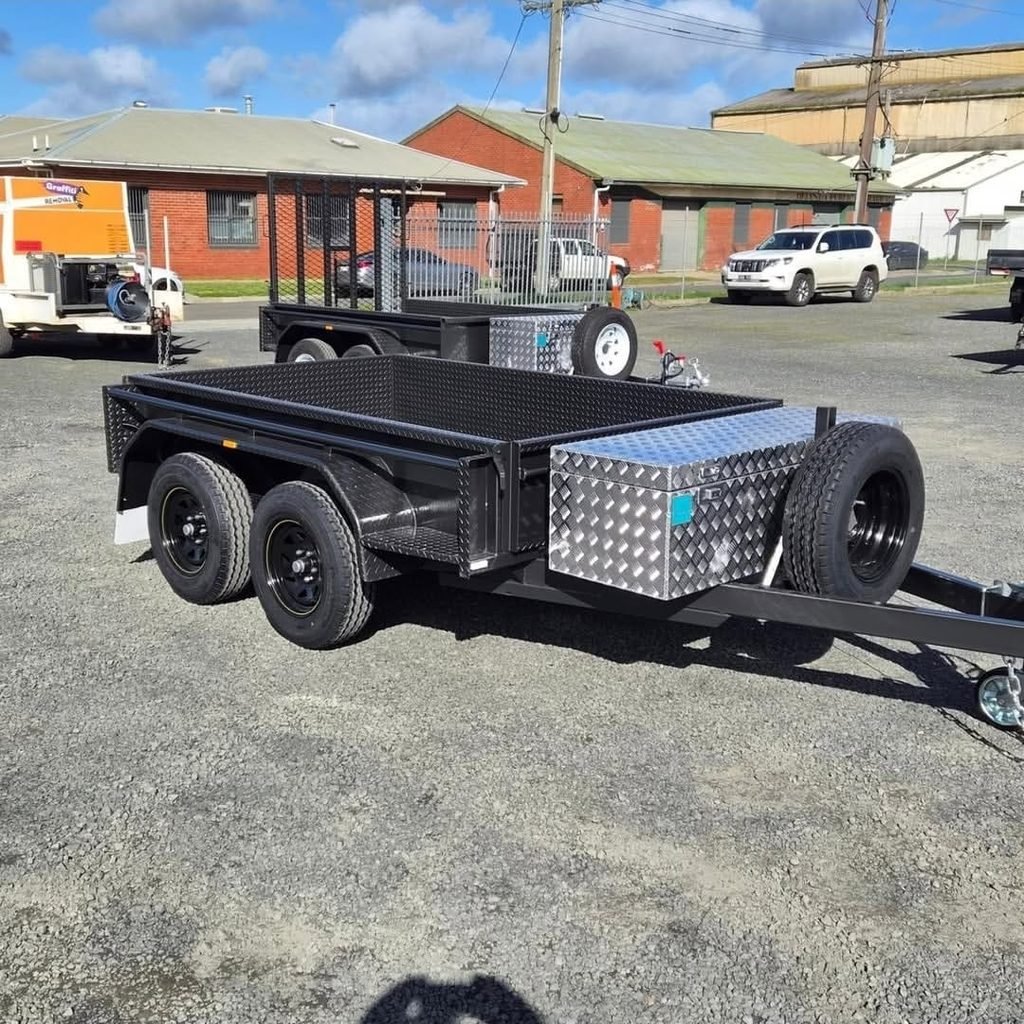
Browse our available flatbed trailers for sale to compare dimensions, weight ratings, axle configurations, deck designs, loading options, towing requirements, pricing, shipping, warranty information, and other product specifications.
Whether you need an open equipment trailer for machinery, a deckover trailer for wider loads, or a gooseneck flatbed for demanding hauling applications, select a trailer according to your actual cargo, towing vehicle, and intended use.
Flatbed Trailers for Sale
Our flatbed trailers for sale provide an open platform designed for transporting appropriately sized equipment, machinery, materials, vehicles, and other cargo.
Unlike enclosed trailers, flatbed trailers provide open access to the cargo area and can make loading and unloading larger or irregularly shaped items more convenient.
Depending on the individual model, flatbed trailers may include:
- Open deck
- Side rails
- Stake pockets
- Tie-down points
- Ramps
- Multiple axles
- Electric brakes
- Different deck heights
- Steel or other deck construction
- Gooseneck configuration
- Bumper-pull configuration
- Different GVWR ratings
- Different payload capacities
Product specifications vary, so always review the individual trailer listing before purchasing.
Equipment Trailers for Sale
Equipment trailers for sale are designed for transporting compatible machinery, construction equipment, landscaping equipment, agricultural equipment, and other heavy or bulky loads within the trailer’s rated capacity.
Potential applications include:
- Construction equipment
- Compact machinery
- Landscaping equipment
- Agricultural equipment
- Skid steers
- Tractors
- Generators
- Compressors
- Maintenance equipment
- Job-site equipment
- Building materials
Before selecting an equipment trailer, determine the actual weight and dimensions of the equipment you plan to transport.
Then compare those specifications with the trailer’s GVWR, payload capacity, axle ratings, tire ratings, deck dimensions, ramp capacity, and other manufacturer specifications.
Deckover Trailers
Deckover trailers have a deck positioned above the trailer wheels, which can provide a wider usable deck area than certain fender-equipped trailer designs.
This configuration may be useful when transporting wider equipment, machinery, pallets, building materials, or other appropriately sized cargo.
When considering a deckover trailer, review:
- Deck width
- Deck length
- GVWR
- Payload
- Axle configuration
- Tire capacity
- Brake configuration
- Ramp capacity
- Coupler
- Tie-down points
- Deck construction
A wider deck does not automatically mean a higher payload capacity. Always use the actual manufacturer specifications.
Gooseneck Flatbed Trailers
Gooseneck flatbed trailers are designed to connect to a compatible gooseneck hitch installed in the bed of a suitable tow vehicle.
Depending on the configuration, gooseneck trailers can provide a substantial platform for equipment and other demanding hauling applications.
Before purchasing a gooseneck flatbed, confirm that your tow vehicle is properly equipped with a compatible gooseneck hitch and is rated to tow the loaded trailer.
Consider:
- Tow vehicle capacity
- Hitch rating
- Trailer GVWR
- Trailer empty weight
- Payload
- Tongue or pin weight
- Axle ratings
- Tire ratings
- Trailer dimensions
- Equipment weight
Never exceed the applicable ratings of the trailer, tow vehicle, hitch, tires, axles, or other towing components.
What Are Flatbed Trailers Used For?
Flatbed trailers can be used for transporting many types of cargo that are appropriate for an open platform.
Potential applications include:
- Construction equipment
- Landscaping machinery
- Agricultural equipment
- Building materials
- Lumber
- Machinery
- Pallets
- Industrial equipment
- Generators
- Compact tractors
- Equipment attachments
- Commercial supplies
- Large or irregularly shaped cargo
The suitability of a particular trailer depends on its dimensions, construction, weight ratings, loading equipment, and intended application.
Always confirm that the cargo is compatible with the trailer before loading.
Choosing the Right Flatbed Trailer
Choosing the right flatbed trailer begins with understanding your cargo and towing requirements.
1. Determine Your Cargo Weight
Find the actual weight of the equipment, machinery, materials, or other cargo you intend to transport.
Do not rely on visual estimates.
For machinery and equipment, use the manufacturer’s stated operating or transport weight where available.
2. Measure Your Cargo
Measure:
- Length
- Width
- Height
- Wheelbase where applicable
- Overall footprint
Compare those dimensions with the trailer’s usable deck space.
3. Check GVWR and Payload
Review the trailer’s GVWR and payload capacity.
Remember that the trailer itself contributes to the overall towing weight.
4. Check Axle and Tire Ratings
Axle and tire ratings are important components of the trailer’s overall load capacity.
Never exceed the manufacturer’s stated ratings.
5. Consider Loading Requirements
Determine whether your equipment needs ramps or another loading solution.
Consider the equipment’s ground clearance and the ramp’s length and capacity.
6. Check Your Tow Vehicle
Confirm that your tow vehicle and hitch are rated for the loaded trailer.
Review the vehicle manufacturer’s towing information before purchasing.
Flatbed Trailer Weight and Capacity
Understanding trailer weight ratings is essential when choosing a flatbed trailer.
GVWR is the maximum loaded weight rating specified for the trailer.
Payload capacity refers to the amount of cargo the trailer is designed to carry according to its specifications.
When determining the required capacity, account for the actual cargo weight and other equipment being transported.
For example, if you transport a piece of machinery along with attachments, tools, spare equipment, or other cargo, include the total expected load.
Do not exceed:
- Trailer GVWR
- Axle ratings
- Tire ratings
- Coupler rating
- Hitch rating
- Tow vehicle capacity
- Other applicable manufacturer limits
Flatbed Trailers for Construction
Construction companies and contractors can use flatbed trailers to transport appropriately sized equipment and materials between jobsites.
Potential construction applications include transporting:
- Construction machinery
- Compact equipment
- Generators
- Compressors
- Building materials
- Lumber
- Job-site equipment
- Tools
- Attachments
Before loading construction equipment, determine its actual weight and make sure the trailer is properly rated.
Cargo should also be appropriately secured for transportation.
For applicable commercial motor vehicles operating in interstate commerce, FMCSA cargo-securement requirements establish requirements intended to prevent cargo from shifting or falling from the vehicle.
Flatbed Trailers for Equipment
Equipment transportation requires careful consideration of weight, dimensions, loading, and securement.
Before transporting machinery or equipment, check:
- Equipment weight
- Trailer payload
- Trailer GVWR
- Equipment dimensions
- Deck dimensions
- Ramp capacity
- Axle capacity
- Tire capacity
- Securement points
- Tow vehicle capacity
FMCSA provides specific cargo-securement requirements for heavy vehicles, equipment and machinery weighing 10,000 pounds or more, while lighter equipment may fall under applicable general or commodity-specific requirements depending on the circumstances.
For equipment under 10,000 pounds transported on a flatbed or drop-deck trailer, FMCSA guidance also addresses securing accessory equipment so it cannot shift during transportation.
Cargo Securement on Flatbed Trailers
Because flatbed trailers have an open deck, proper cargo securement is especially important.
Cargo should be appropriately immobilized or secured using suitable equipment and methods.
Depending on the cargo and application, securement may involve:
- Chains
- Straps
- Tie-downs
- Binders
- Anchor points
- Blocking
- Bracing
- Chocks
- Edge protection
- Other appropriate securement equipment
FMCSA states that applicable cargo-securement systems must be capable of preventing cargo from shifting or falling and establishes performance criteria for covered commercial motor vehicles.
NHTSA also advises drivers to properly secure loads and avoid excessive cargo when transporting items on vehicles or trailers.
Always follow the manufacturer’s instructions and applicable federal, state, and local requirements.
Loading a Flatbed Trailer
Safe loading starts with knowing the cargo’s actual weight and dimensions.
Before loading:
- Inspect the trailer.
- Check tires and wheels.
- Check ramps and loading equipment.
- Confirm that the trailer capacity is appropriate.
- Position the equipment according to the manufacturer’s instructions.
- Distribute the load appropriately.
- Secure the cargo.
- Inspect all securement equipment.
- Check that nothing can shift or fall during transportation.
For commercial transportation, applicable FMCSA requirements should be reviewed for the specific cargo and vehicle configuration.
Flatbed Trailer Ramps
Ramps can make it easier to load wheeled equipment and machinery.
When selecting a trailer with ramps, consider:
- Ramp length
- Ramp width
- Ramp capacity
- Loading angle
- Ramp construction
- Ramp storage
- Equipment ground clearance
The ramp must be appropriate for the weight and dimensions of the equipment being loaded.
Never assume that a ramp is capable of carrying equipment simply because the trailer itself has a high GVWR.
Gooseneck vs. Bumper-Pull Flatbed Trailers
Flatbed trailers can be available in different hitch configurations.
Gooseneck Flatbed
Gooseneck trailers connect to a hitch installed in the bed of a compatible pickup or other suitable tow vehicle.
Potential advantages include a different weight-distribution arrangement and a substantial connection point for compatible towing applications.
Bumper-Pull Flatbed
Bumper-pull trailers connect to a compatible receiver hitch at the rear of the tow vehicle.
They may be suitable for a variety of lighter-duty and general hauling applications depending on the specific trailer and tow vehicle.
The best configuration depends on your load, trailer rating, towing vehicle, hitch equipment, and intended use.
Flatbed Trailer vs. Enclosed Trailer
A flatbed trailer provides an open deck, while an enclosed trailer provides a covered cargo compartment.
A flatbed may be preferable when:
- Cargo is oversized
- Easy loading is important
- Side access is useful
- Cargo height makes enclosure impractical
- Large equipment needs to be transported
An enclosed trailer may be preferable when:
- Cargo needs additional weather protection
- Security is important
- Enclosed storage is desired
- Tools or supplies need to remain covered
Choose according to the cargo and intended application rather than assuming one configuration is universally better.
How to Buy a Flatbed Trailer Online
Buying a flatbed trailer online should involve careful comparison of the actual specifications.
Step 1: Identify the cargo
Determine exactly what equipment, machinery, materials, or other cargo you intend to transport.
Step 2: Determine cargo weight
Use actual manufacturer or equipment specifications whenever possible.
Step 3: Measure the cargo
Record length, width, height, and other relevant dimensions.
Step 4: Select the trailer
Compare available trailer sizes, configurations, capacities, and features.
Step 5: Check towing compatibility
Confirm that your tow vehicle and hitch are appropriately rated.
Step 6: Review loading equipment
Check ramps, deck height, loading angle, and ramp capacity.
Step 7: Review securement options
Check tie-down points, stake pockets, rails, and other available equipment.
Step 8: Review shipping and delivery
Check the applicable delivery method, cost, estimated delivery time, and destination requirements.
Step 9: Review warranty and returns
Read the applicable warranty and return policies before completing your purchase.
Step 10: Complete your order
Once you have confirmed the trailer’s specifications and purchasing conditions, use the available checkout process to place your order.
Flatbed Trailer Shipping and Delivery
Flatbed trailers are large products that may require specialized transportation.
Delivery requirements can vary depending on:
- Trailer dimensions
- Trailer weight
- Destination
- Carrier availability
- Residential or commercial delivery
- Delivery access
- Transportation requirements
Before ordering, review the applicable USA Trailer Depot Shipping & Delivery Policy.
Make sure the delivery address is accurate and that the delivery location can accommodate the trailer and transportation vehicle.
Flatbed Trailer Warranty
Warranty coverage varies by manufacturer, model, trailer, and component.
Some flatbed trailers may include manufacturer warranty coverage, while specific products may have different warranty terms.
Review the warranty information provided with the individual trailer before purchasing.
For a warranty claim, you may be required to provide order information, trailer details, photographs, a description of the issue, and other supporting documentation.
Flatbed Trailer Returns
Return eligibility is governed by the applicable USA Trailer Depot Returns & Refunds Policy and the specific product conditions.
Before purchasing, review:
- Return eligibility
- Return timeframe
- Shipping responsibility
- Inspection requirements
- Refund procedure
- Applicable fees
- Product-specific restrictions
Inspect your trailer when it is delivered and report visible transportation damage promptly according to the applicable procedures.
Why Buy Flatbed Trailers from USA Trailer Depot?
USA Trailer Depot provides an online destination for customers looking for trailer solutions for construction, equipment transportation, agriculture, business, landscaping, and general hauling.
Our Flatbed Trailers category allows customers to compare available models according to size, capacity, configuration, loading equipment, price, shipping, warranty, and intended application.
Whether you need an equipment trailer for construction machinery, a deckover trailer for wider loads, or a gooseneck flatbed for demanding hauling applications, review the actual specifications of each trailer before purchasing.
Explore More Trailer Categories
Looking for another trailer type?
Explore:
- Utility Trailers
- Cargo & Box Trailers
- Car Transporters
- Dump / Tipper Trailers
- Boat Trailers
- Motorcycle Trailers
- Livestock Trailers
- Refrigerated Trailers
- Food Trailers
- Camping & Travel Trailers
- Heavy-Duty Trailers
- Special-Purpose Trailers
Frequently Asked Questions About Flatbed Trailers
What is a flatbed trailer?
A flatbed trailer is an open trailer with a flat deck designed to transport equipment, machinery, materials, vehicles, and other compatible cargo.
What are flatbed trailers used for?
Flatbed trailers can be used for transporting construction equipment, agricultural machinery, building materials, landscaping equipment, industrial equipment, machinery, and other cargo that fits within the trailer’s rated specifications.
What is a deckover trailer?
A deckover trailer has a deck positioned above the trailer wheels, which can provide additional usable deck width compared with some fender-equipped designs.
What is a gooseneck flatbed trailer?
A gooseneck flatbed trailer connects to a compatible hitch installed in the bed of a suitable tow vehicle.
What size flatbed trailer do I need?
The appropriate size depends on your cargo’s weight, length, width, height, and loading requirements. Compare the cargo with the trailer’s actual deck dimensions and weight ratings.
How much weight can a flatbed trailer carry?
Capacity varies by trailer. Review the specific trailer’s GVWR, payload capacity, axle ratings, tire ratings, and other manufacturer specifications.
Can I haul construction equipment on a flatbed trailer?
Some flatbed trailers are designed for compatible construction equipment. You must verify that the equipment’s weight and dimensions are within the trailer’s rated specifications.
Do I need ramps for a flatbed trailer?
Ramps may be useful or necessary for loading wheeled equipment and machinery. Whether they are required depends on the equipment and trailer configuration.
How should cargo be secured on a flatbed trailer?
Cargo should be properly immobilized or secured using appropriate equipment and methods. Applicable commercial transportation may be subject to FMCSA cargo-securement requirements.
Are gooseneck trailers better than bumper-pull trailers?
Neither configuration is universally better. The appropriate choice depends on the load, trailer specifications, tow vehicle, hitch configuration, and intended application.
Can I buy a flatbed trailer online?
Yes. Customers can browse available flatbed trailers online, compare specifications and pricing, review shipping and purchasing information, and complete the available checkout process.
How are flatbed trailers delivered?
Delivery depends on the trailer, destination, carrier, and transportation requirements. Large trailers may require specialized transportation.
What should I check before buying a flatbed trailer?
Check the deck dimensions, GVWR, payload, trailer weight, axle ratings, tire ratings, brakes, ramps, tie-down points, hitch configuration, tow vehicle requirements, warranty, returns, shipping, price, and availability.
Find Your Flatbed Trailer
Ready to find the right trailer for your equipment or hauling needs?
Browse our flatbed trailers for sale, compare available specifications, and select a trailer that matches your cargo, tow vehicle, and intended application.
Shop Flatbed Trailers at USA Trailer Depot and find an open hauling solution for equipment, machinery, construction materials, agriculture, landscaping, and commercial applications.