Looking for dependable livestock trailers for sale for your farm, ranch, agricultural operation, or animal transportation needs? USA Trailer Depot offers livestock trailer solutions designed for customers who need to transport horses, cattle, and other compatible livestock.
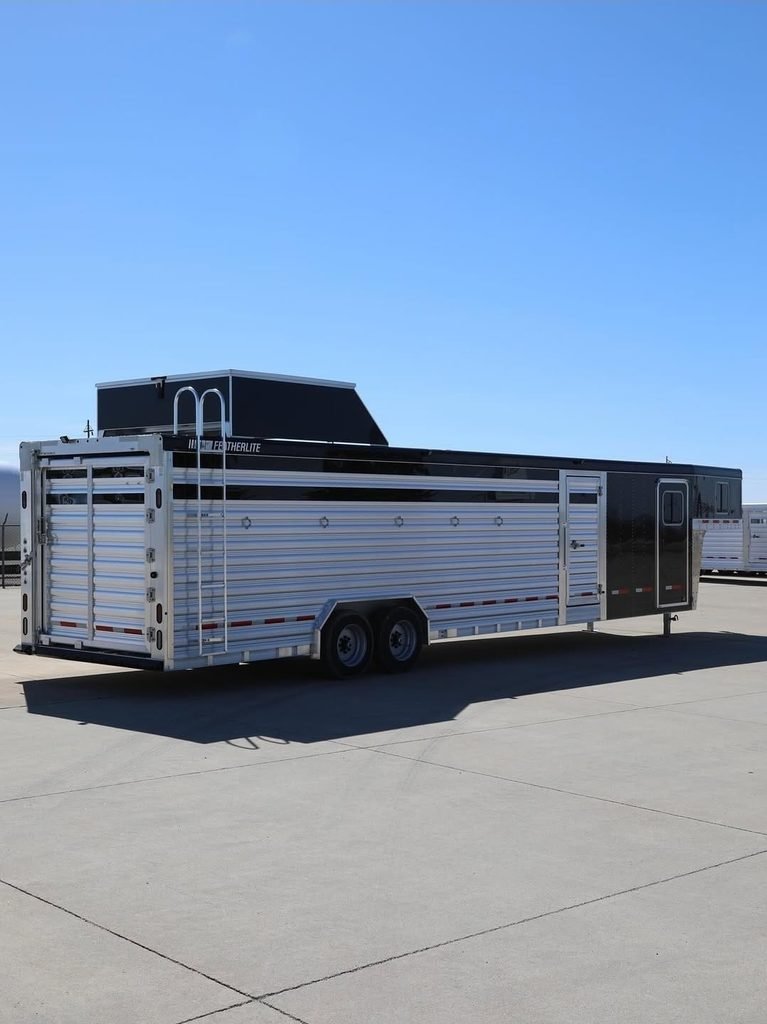
Livestock trailers are built around the requirements of animal transportation and can be available in different sizes, configurations, materials, ventilation designs, loading arrangements, and capacities.
Our selection may include horse trailers, stock trailers, and livestock utility trailers, depending on current inventory.
When choosing a livestock trailer, it is important to consider the animals being transported, trailer dimensions, weight capacity, ventilation, flooring, loading access, towing requirements, and applicable animal-transport regulations.
Browse available livestock trailers for sale online and compare the specifications, features, pricing, shipping, warranty, and return information for each individual trailer.
Shop Livestock Trailers Online
USA Trailer Depot makes it convenient to browse and compare available livestock trailers online.
Depending on inventory, our selection can include:
- Horse Trailers
- Stock Trailers
- Livestock Utility Trailers
- Cattle Trailers
- Farm Trailers
- Ranch Trailers
- Animal Transport Trailers
- Open Livestock Trailers
- Enclosed Livestock Trailers
Trailer configurations vary, so customers should review the individual product specifications to determine whether a particular trailer is suitable for their intended animals and application.
Horse Trailers for Sale
Horse trailers are designed to transport horses and may incorporate features intended to support animal loading, positioning, ventilation, and transportation.
Depending on the model, features may include:
- Horse stalls
- Dividers
- Rear loading doors
- Side access doors
- Ramps
- Ventilation openings
- Non-slip flooring
- Interior partitions
- Tie points
- Tack/storage areas
When selecting a horse trailer, consider the number and size of horses you intend to transport.
Interior dimensions are particularly important. The trailer should provide appropriate space for the animals according to the trailer manufacturer’s specifications and applicable requirements.
Stock Trailers for Sale
Stock trailers are commonly used for transporting livestock such as cattle and other farm animals.
Stock trailer designs can vary significantly, so compare:
- Trailer length
- Trailer width
- Interior height
- Floor construction
- Side panels
- Gate configuration
- Rear gate
- Ventilation
- Axle configuration
- GVWR
- Payload
- Tire ratings
- Braking system
The correct trailer depends on the animals being transported and the specific trailer’s rated capacity and design.
Livestock Utility Trailers
A livestock utility trailer can provide a flexible solution for farms, ranches, agricultural businesses, and other operations that need to transport animals or compatible equipment.
Depending on the configuration, utility livestock trailers may be designed with features that facilitate:
- Animal loading
- Animal unloading
- Ventilation
- Access through multiple gates
- Separation of animals
- Routine farm transportation
- Agricultural hauling
Always check the product’s specifications before purchasing to confirm the intended application.
Choosing the Right Livestock Trailer
Selecting the right livestock trailer for sale requires more than choosing a trailer based on its exterior size.
Consider the following factors.
1. Type of Animal
Different animals have different transportation requirements.
You may need a trailer specifically configured for:
- Horses
- Cattle
- Sheep
- Goats
- Pigs
- Other compatible livestock
The trailer should be appropriate for the species and number of animals you intend to transport.
2. Trailer Dimensions
Check the trailer’s:
- Length
- Width
- Interior height
- Door dimensions
- Stall dimensions where applicable
- Floor area
- Loading height
Make sure the dimensions are appropriate for the animals and intended loading configuration.
3. Trailer Capacity
Consider the combined weight of the animals and any additional equipment or cargo.
Check the trailer’s:
- GVWR
- GAWR
- Empty weight
- Payload capacity
- Axle ratings
- Tire ratings
Never exceed the manufacturer’s rated capacity.
4. Flooring
Flooring is particularly important for livestock transportation.
The floor should be appropriate for the trailer’s intended animal use and maintained according to the manufacturer’s recommendations.
USDA APHIS materials emphasize keeping animal transport trailers clean and in good repair and identify non-slip flooring and avoiding sharp edges or areas where animals could become trapped as important considerations.
5. Ventilation
Adequate ventilation is another important consideration.
Look for appropriate ventilation openings and airflow based on the trailer’s design and intended animal use.
Animal transportation guidance from USDA emphasizes consideration of temperature conditions and ventilation during transport.
Livestock Trailer Gates and Loading
Loading and unloading should be planned carefully.
Depending on the trailer, you may find:
- Rear gates
- Side gates
- Full-width rear doors
- Loading ramps
- Dividers
- Walk-through doors
- Multiple access points
The correct configuration depends on the animals and the loading environment.
Before loading animals, inspect gates, hinges, latches, flooring, dividers, and other components to make sure they are in suitable condition.
Livestock Trailer Safety
Livestock transportation requires attention to both trailer condition and animal welfare.
USDA guidance identifies factors such as trailer cleanliness, floor condition, structural strength, door latches, tires, hitches, load ratings, ventilation, temperature control where applicable, and adequate barriers as important considerations for animal transport vehicles.
Before using a livestock trailer:
- Inspect the trailer structure.
- Check the flooring.
- Check gates and latches.
- Inspect tires.
- Check wheels and bearings according to manufacturer recommendations.
- Inspect the hitch and coupler.
- Check safety chains.
- Verify trailer lights.
- Check brakes where equipped.
- Confirm ventilation.
- Remove sharp or protruding objects.
- Confirm the trailer is appropriate for the animals.
- Stay within rated weight limits.
Livestock Transportation Regulations
Animal transportation requirements can vary depending on the animals, purpose of transportation, route, and whether transportation is interstate or intrastate.
USDA APHIS states that interstate movement of animals is subject to federal requirements and that individual states may have additional animal-entry requirements.
For certain interstate livestock movements, documentation such as a Certificate of Veterinary Inspection (CVI) may be required depending on the animal and destination requirements. APHIS provides current guidance on interstate animal-movement documentation.
Customers should verify applicable federal and state requirements with the appropriate animal-health authorities before transporting livestock.
Important website wording
For USA Trailer Depot, avoid saying that a particular livestock trailer is automatically “USDA approved” or “government approved” unless the manufacturer has specific documentation supporting that claim.
The trailer itself and the legal requirements for transporting animals are separate matters.
Interstate Livestock Transportation
Customers transporting livestock between states should check the requirements of the destination state before traveling.
USDA APHIS explains that interstate animal movement can involve federal requirements as well as additional state requirements.
Requirements may relate to:
- Animal health
- Identification
- Veterinary inspection
- Permits
- Disease control
- Destination requirements
USA Trailer Depot sells trailers; customers remain responsible for determining and complying with applicable animal transportation requirements for their specific situation.
28-Hour Livestock Transportation Rule
Federal law includes the Twenty-Eight Hour Law, which addresses the transportation of certain livestock and provides requirements concerning feeding, water, rest, and unloading after animals have been confined for the applicable period. USDA’s current information explains that animals transported for more than 28 consecutive hours generally must be unloaded for at least five consecutive hours for feed, water, and rest, subject to statutory exceptions.
This is particularly relevant for customers using livestock trailers for longer-distance transportation.
Because requirements can vary depending on the circumstances and applicable exceptions, customers should review current USDA requirements before interstate livestock transportation.
Livestock Trailers for Farms and Ranches
A livestock trailer can be a practical asset for farmers and ranchers who regularly need to move animals between locations.
Potential applications include:
- Moving cattle
- Transporting horses
- Farm-to-farm transportation
- Ranch operations
- Agricultural events
- Livestock markets
- Veterinary visits
- Breeding operations
- Pasture relocation
The appropriate trailer depends on the animal type, number of animals, distance, towing vehicle, and intended use.
Livestock Trailers for Cattle
For cattle transportation, consider:
- Trailer interior dimensions
- Number of animals
- Animal weight
- Ventilation
- Flooring
- Gate configuration
- Trailer payload
- GVWR
- Axle ratings
- Tire ratings
- Towing requirements
The trailer should provide an appropriate environment for the cattle while remaining within its rated capacity.
Livestock Trailers for Horses
When choosing a horse trailer, consider the horses’ size and the trailer’s interior dimensions.
Important considerations include:
- Stall dimensions
- Interior height
- Ventilation
- Flooring
- Dividers
- Rear loading
- Side access
- Tie points
- Trailer capacity
- Towing requirements
Customers should follow the horse trailer manufacturer’s instructions and applicable animal welfare requirements.
Buy Livestock Trailers Online
USA Trailer Depot makes it possible to buy livestock trailers online while reviewing important product information before placing an order.
Before purchasing, compare:
- Trailer dimensions
- Interior dimensions
- Animal capacity
- GVWR
- Payload
- Trailer weight
- Axles
- Tires
- Brakes
- Flooring
- Ventilation
- Gates
- Ramps
- Hitch/coupler
- Price
- Availability
- Shipping
- Warranty
- Returns
For large trailers, delivery may require specialized transportation. Shipping costs can depend on trailer dimensions, weight, destination, carrier availability, and delivery requirements.
Livestock Trailer Shipping & Delivery
USA Trailer Depot provides trailer delivery options depending on the product and destination.
Shipping costs may depend on:
- Trailer size
- Trailer weight
- Delivery location
- Residential or commercial delivery
- Carrier availability
- Special delivery requirements
Customers should review the applicable shipping information for the specific product before completing an order.
Internal link:
Shipping & Delivery
Livestock Trailer Warranty
Warranty coverage varies by manufacturer, model, components, and the applicable written warranty.
Customers should review the warranty information associated with each individual livestock trailer before purchasing.
Internal link:
Warranty Policy
Livestock Trailer Returns
Customers should review the USA Trailer Depot Returns & Refunds Policy before ordering.
Return eligibility can depend on the trailer’s condition, whether it has been used, the return timeframe, shipping requirements, inspection, and other applicable terms.
Internal link:
Returns & Refunds
Why Buy Livestock Trailers from USA Trailer Depot?
USA Trailer Depot provides customers with an online way to browse livestock trailers and compare important product information.
Customers can:
- Browse livestock trailers
- Compare specifications
- Compare trailer configurations
- Review pricing
- Check availability
- Review shipping information
- Review warranty information
- Review return requirements
- Review payment options
- Purchase online
Our goal is to provide clear product information so customers can evaluate a trailer against their specific transportation requirements.
Frequently Asked Questions
What is a livestock trailer?
A livestock trailer is a trailer designed or configured to transport animals such as cattle, horses, sheep, goats, pigs, or other compatible livestock.
What is a stock trailer?
A stock trailer is generally an open or ventilated livestock trailer designed to transport animals. Specific configurations and intended uses vary by manufacturer.
What is the difference between a livestock trailer and a horse trailer?
Horse trailers are specifically configured around transporting horses and may include stalls, dividers and other features. Livestock or stock trailers can be designed for broader livestock applications.
How many animals can a livestock trailer carry?
Capacity varies by trailer and animal type. The number of animals should be determined using the trailer’s specifications, available space, animal size and applicable requirements.
What size livestock trailer do I need?
The correct size depends on the type and number of animals, their size and weight, towing vehicle, travel requirements, and the trailer manufacturer’s specifications.
Do livestock trailers need ventilation?
Appropriate ventilation is an important consideration for animal transportation. Trailer design should provide conditions appropriate to the animals and weather. USDA guidance specifically identifies ventilation and temperature management as considerations in animal transport.
Can I use a stock trailer for horses?
That depends on the specific trailer and its design. Verify that the trailer is appropriate for horses and follow the manufacturer’s specifications.
Can I buy livestock trailers online?
Yes. USA Trailer Depot allows customers to browse available livestock trailers online and review pricing, specifications, shipping, warranty and return information.
Can livestock trailers be used for interstate transportation?
They can be used for interstate transportation when the trailer and towing setup are appropriate, but customers must comply with applicable federal and state animal-movement requirements.
Do I need veterinary documents to transport livestock?
Requirements depend on the animal, origin, destination and circumstances. USDA APHIS notes that a Certificate of Veterinary Inspection may be required for certain interstate movements.
What should I inspect before using a livestock trailer?
Inspect flooring, gates, latches, tires, wheels, hitch, safety chains, lights, brakes where equipped, ventilation, structural components and other trailer systems.
How are livestock trailers delivered?
Delivery depends on the individual trailer and destination. Specialized trailer transportation may be used depending on the product.
Explore More Trailer Categories
Create internal links to:
- Utility Trailers
- Cargo & Box Trailers
- Car Transporters
- Flatbed Trailers
- Tipper Trailers
- Boat Trailers
- Motorcycle Trailers
- Livestock Trailers
- Refrigerated Trailers
- Food Trailers
- Camping & Travel Trailers
- Heavy-Duty Trailers
- Special-Purpose Trailers
CTA
Find the Right Livestock Trailer
Browse available livestock trailers for sale and compare trailer specifications, features, pricing, shipping, warranty and purchase options.
Shop Livestock Trailers →